Consecutive Days With Stochastic %K Below %D
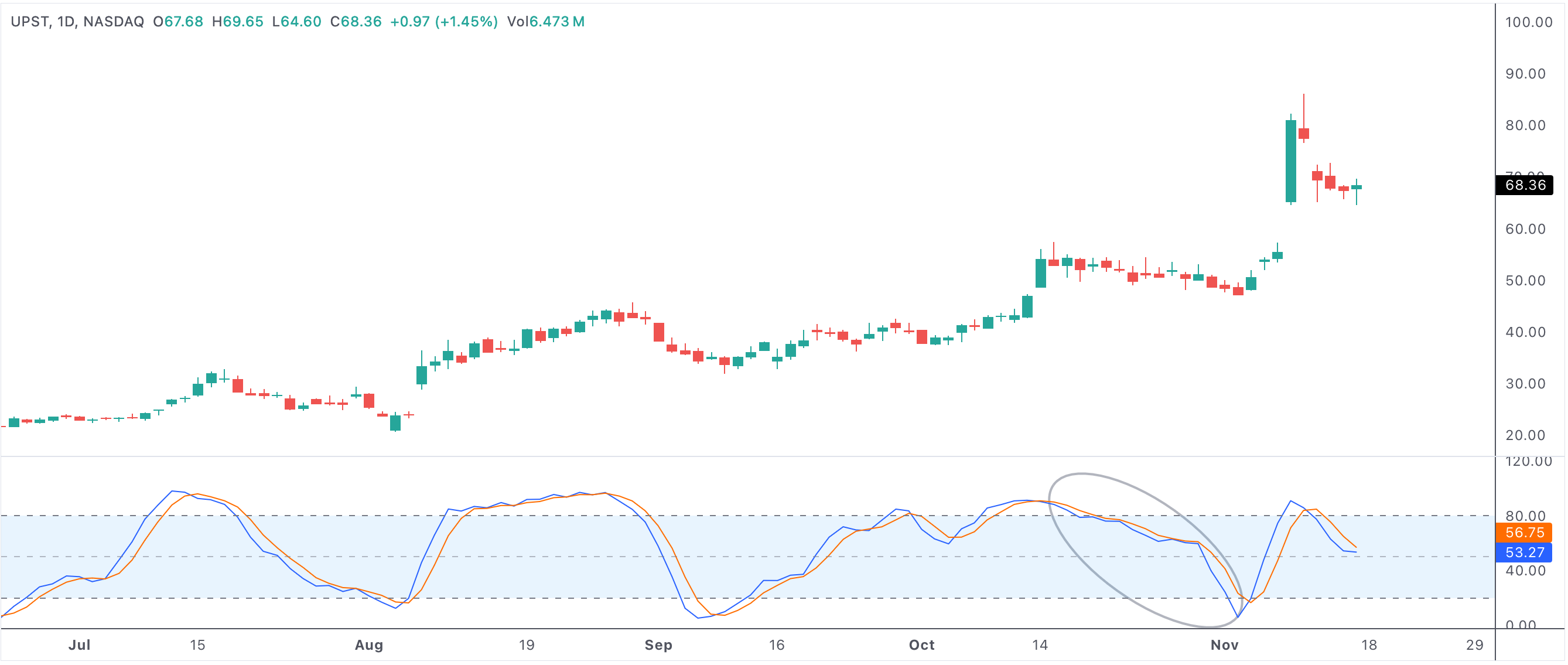
Consecutive days with stochastic %K below %D usually signal persistent short-term weakness. When the faster %K line remains below the slower %D line for multiple sessions, it suggests that downside momentum has been dominant and buyers have not yet regained control. Traders often compare this setup with stochastic %K crossing back up through 20, since a bullish turn becomes more interesting after several sessions of weak momentum.
stochkbelowd
An example of stochastic %K staying below %D for multiple sessions.
Consecutive days with stoch k below stoch d
Why The Streak Matters
A single bearish stochastic crossover can come and go quickly. A multi-day stretch with %K below %D is more useful because it shows weakness is persisting rather than appearing for only one session. That can be valuable for identifying stocks still under pressure or nearing an exhaustion point.
The signal by itself is not bullish. It simply highlights charts where momentum has been weak long enough to matter.
How Traders Use It
Some traders use this screen to avoid weak charts until momentum improves. Others watch for the first sign of reversal after a prolonged weak stretch. Either way, the setup is most helpful when paired with support, price action, and follow-through.
- %K below %D for several days reflects persistent downside momentum.
- The setup can help surface both weak charts and rebound candidates.
- Price confirmation is needed before treating it as bullish.
- This screen is most useful as context for a later reversal signal.