Inside Day Consolidation Pattern
An inside day consolidation pattern occurs when the second candle trades entirely within the range of the first candle. This structure signals a temporary pause in volatility and often reflects indecision before a larger move. Traders watch inside days because they can act like pressure-building patterns, especially when they appear after a strong trend or near important support and resistance levels. A closely related setup is the Bollinger Band squeeze, since both patterns reflect contraction before potential expansion.
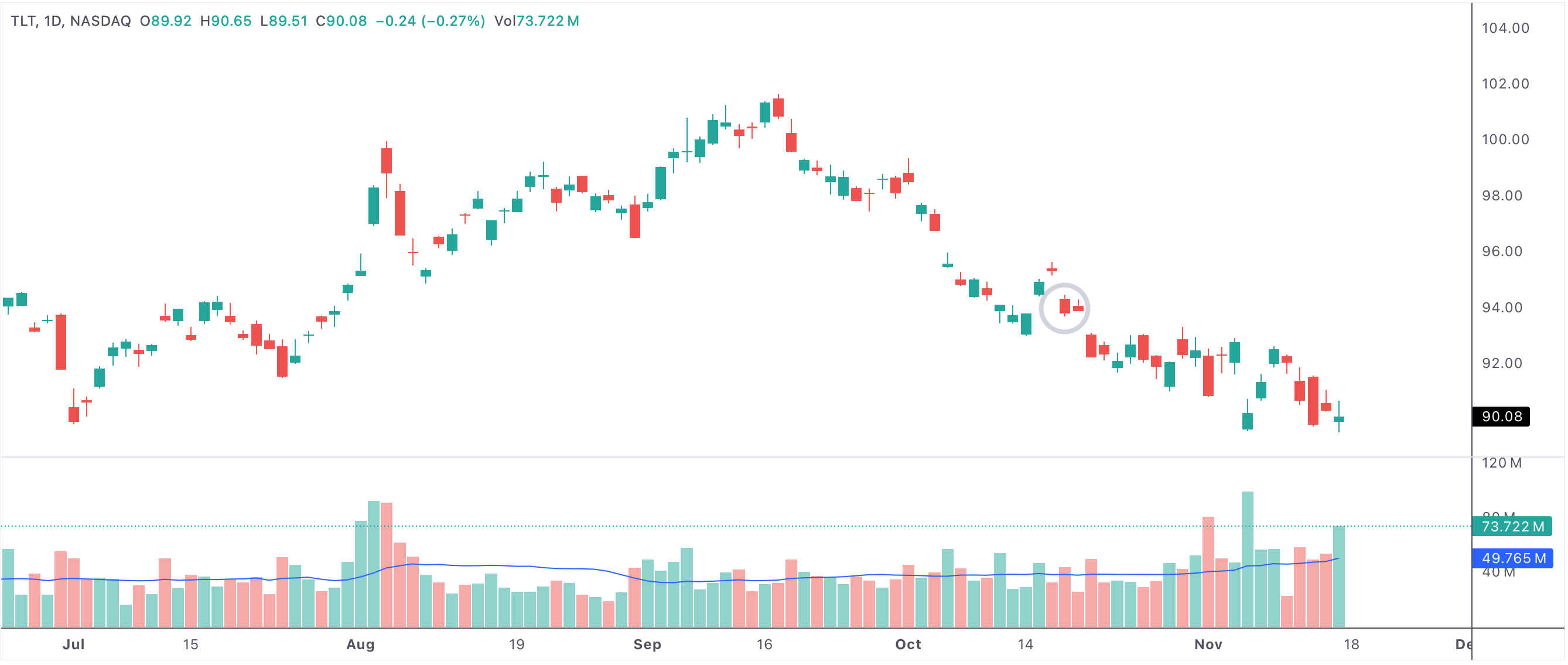
insideday
An example of a stock forming a classic inside day consolidation.
Consolidation pattern with the second candle within the range of the first
Why This Pattern Matters
Inside days matter because they mark a pause in directional expansion. Instead of continuing strongly higher or lower, price compresses into a smaller range. That compression can set up a more meaningful move once the range breaks.
The pattern itself is neutral. Its usefulness comes from the context around it and the direction of the eventual breakout or breakdown.
How Traders Use It
Some traders use inside days as breakout or breakdown setups. Others use them simply as a sign that a stock deserves closer attention because volatility has tightened. The key is to watch where price resolves relative to the inside day's boundaries.
- An inside day reflects short-term consolidation and reduced volatility.
- The setup is neutral until price breaks the range.
- Trend context makes the pattern more useful.
- This structure is valuable for spotting pause-before-move setups.