Stocks Losing Momentum After Strength - RSI Cross Below 50
Stocks losing momentum after a strong advance often show it first when the Relative Strength Index crosses below 50. This RSI cross below 50 matters because it signals that bullish momentum is no longer dominant and that the stock may be entering a pullback, consolidation, or trend reversal phase. Many traders compare this setup with RSI Crossed Above 50 to understand the shift from strengthening momentum to weakening momentum.
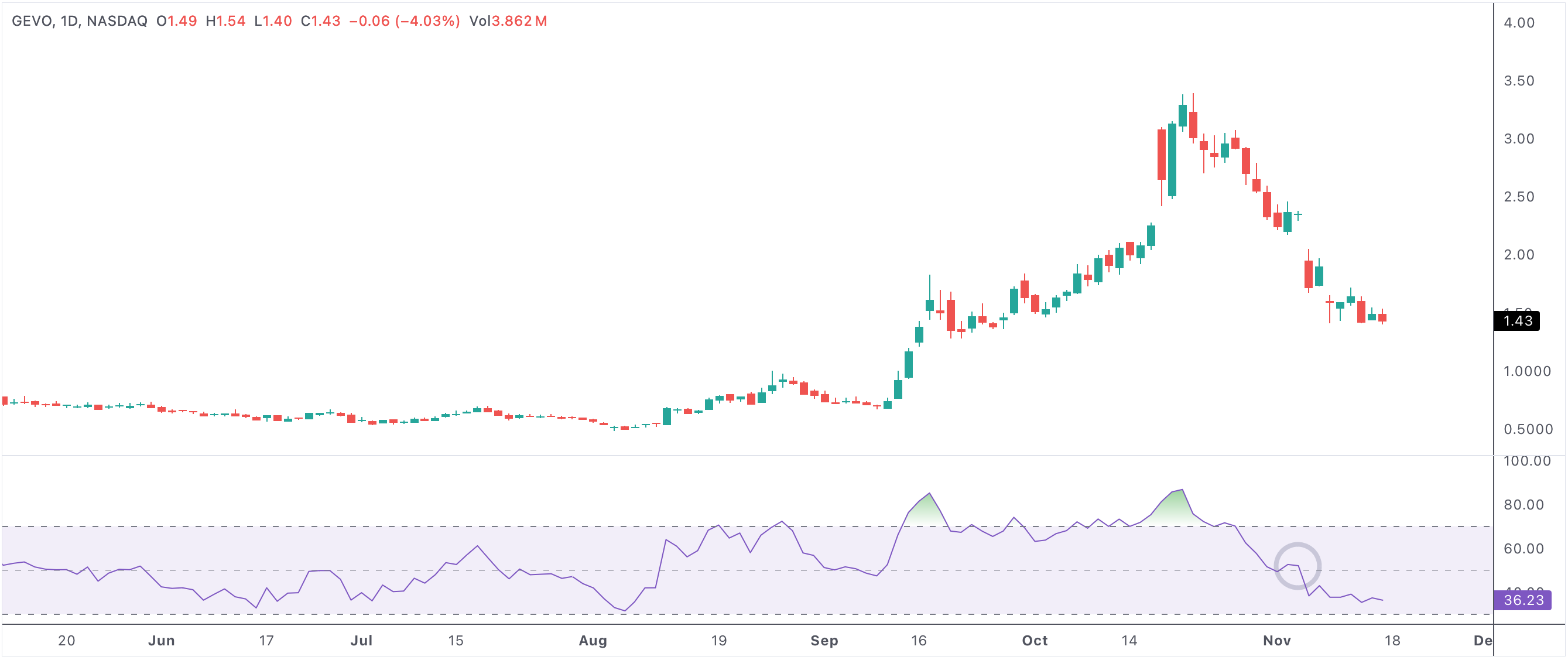
rsicrossdown50
An example of a stock with the RSI crossing down 50 after a strong rally.
Stocks losing momentum after a period of strength and RSI crossing below 50
Why RSI Below 50 Matters
The RSI midpoint at 50 is often treated as a dividing line between bullish and bearish momentum. When RSI drops below 50 after a sustained move higher, it suggests buyers are losing control and sellers are starting to push back. That does not always mean a major downtrend is beginning, but it does mean the prior momentum has weakened enough to deserve attention.
What This Setup Can Lead To
In some cases, the signal marks the start of a healthy pause after an extended rally. In other cases, it acts as an early warning that the stock is rolling over into a deeper correction. The difference usually comes down to context: support levels, trend structure, broader market conditions, and whether volume confirms the loss of momentum.
Traders often become more defensive when RSI falls below 50 because the probability of choppy price action or downside follow-through increases. That can lead to tighter stops, reduced position size, or a wait-and-see approach until strength returns.
- RSI below 50 suggests bullish momentum is fading.
- The signal can precede a pullback, sideways consolidation, or trend reversal.
- It becomes more important when price is also losing support or trend structure.
- Some traders use it as a warning sign rather than an immediate sell signal.
- Confirmation from price action and volume helps separate noise from real weakness.
How Traders Use It
Momentum traders may use this setup to lock in gains, reduce exposure, or avoid initiating new long positions too early. Others look for the stock to stabilize and recover before re-entering. In strong markets, an RSI dip below 50 can become a reset rather than a breakdown. In weak markets, it can be the first sign that sellers are taking over.
For that reason, the RSI cross below 50 is most useful when treated as part of a broader process. It helps traders recognize when a stock is no longer acting as strongly as it was before and when it may be time to shift from offense to caution.