Stocks With the Biggest Losses - Bearish Momentum and Risk Signals
Stocks with the biggest losses over a given period can reveal where selling pressure is strongest, where sentiment has deteriorated, and where risk is rising fastest. For traders, this scan is useful not just for identifying weak stocks, but for understanding which parts of the market are under the most stress. Many investors compare the biggest losers list with Biggest Percent Gainers to see where capital is leaving and where it is flowing instead.
biggestlosers
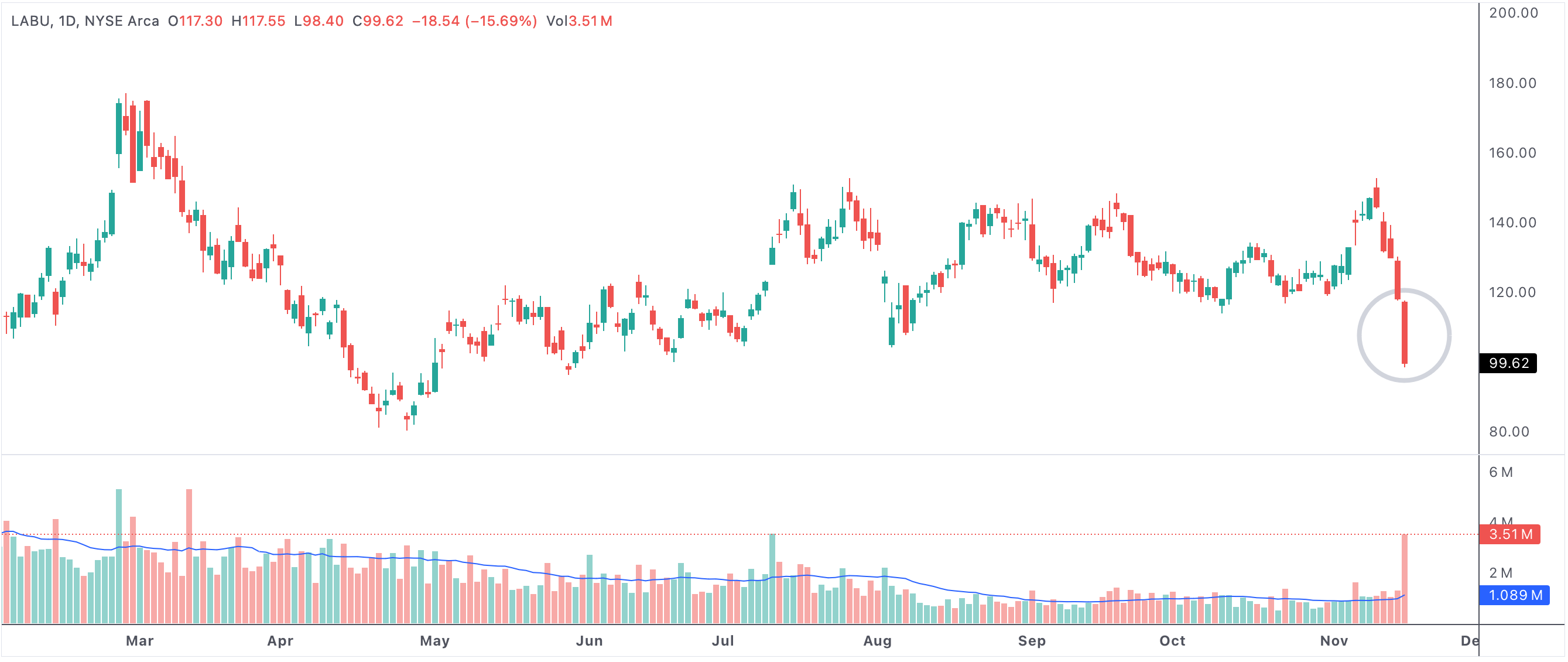
A sample chart highlighting a stock experiencing a substantial loss over a short time.
Stocks with the biggest losses in a given period
Why The Biggest Losers Matter
The biggest losers list highlights more than just weak price action. It often reflects failed earnings reactions, broken momentum, sector-wide risk, or abrupt changes in market expectations. That makes it useful for both defense and opportunity. Traders can use it to avoid weak areas of the market, while contrarian investors may monitor it for signs of capitulation or oversold rebound setups.
What Large Declines Can Signal
Large losses often indicate that the market is aggressively repricing risk. In some cases the decline is driven by a specific company problem such as disappointing guidance, poor results, or negative news. In other cases it reflects broader sector weakness or a market environment where investors are reducing exposure across the board.
When a stock shows up repeatedly among the biggest losers, it usually means the weakness is persistent rather than random. That can be a warning sign for longs and a sign of opportunity for traders who focus on relative weakness.
- Biggest losers often reveal where bearish momentum is strongest.
- The scan can highlight sector stress, negative sentiment, and breakdowns in price structure.
- Repeated appearances may suggest ongoing weakness rather than a one-day anomaly.
- Some traders use the list for short setups, while others watch for oversold rebounds.
- Context matters: not every large loser is automatically a bargain.
How Traders Use This Scan
Short-biased traders may use the biggest losers scan to find names that are breaking support, trending lower on heavy volume, or continuing downside momentum after a failed bounce. Long-only traders may use the same scan defensively to avoid weak charts and preserve capital. Contrarian traders sometimes monitor the list for washout conditions, but usually only after signs of stabilization appear.
That balance is what makes this scan valuable. It helps traders identify risk early, understand which names are being aggressively sold, and decide whether the move is best avoided, shorted, or watched for a future reversal setup.